Why You Should Test for Radon in York Before It Becomes a Health Concern
If you live in York County, Pennsylvania, you already know the area has a rich history, beautiful old homes, and plenty of basement space for storage or a workshop. But there is something else that might be lurking down there, something you cannot see or smell. Radon gas is a silent intruder that seeps into buildings from the soil, and the geology in this part of the state makes it more common than many people realize. The only way to know if your home has a problem is to test for radon in York, and the good news is that testing is straightforward and affordable.
I have spent years working with homeowners and renters across Pennsylvania, and I have seen too many families learn about radon only after they have already lived with high levels for years. The EPA estimates that radon causes around 21,000 lung cancer deaths each year in the United States. It is the second leading cause of lung cancer after smoking, and the risk is higher for smokers because the two together create a dangerous synergy. In York County, the average indoor radon level is above the EPA action level of 4 picocuries per liter, which means that roughly one in every three homes in the area may have a problem. That is not a scare tactic; it is a fact based on years of data from the health department and independent studies.
How Radon Gets Into Your Home
Radon gas comes from the natural decay of uranium in the ground. As the uranium breaks down, radon is released into the soil and then moves upward through cracks and gaps in the foundation. In York, many homes were built with stone foundations, dirt crawl spaces, or block walls that are decades old. These structures often have plenty of entry points for radon: joints, gaps around pipes, sump pumps, and even tiny fissures in the concrete slab. The basement is usually the primary entry point because it is closest to the soil, but radon can also travel upward through the house if the air pressure inside is lower than the pressure in the ground.
A neighbor of mine bought a split-level home in Springettsbury Township a few years ago. The previous owners had never tested for radon. When my neighbor finally did a test after a home inspection flagged the possibility, the results came back at 8 picocuries per liter, double the EPA action level. They had a mitigation system installed, and now the level is under 2. That is a typical story around here. You do not have to live with high radon, but you have to know it is there first.
Choosing the Right Radon Test Kit
There are two main types of tests available to homeowners: short-term and long-term. A short-term test usually uses a charcoal canister that absorbs radon over a period of two to seven days. These are great for a quick snapshot, especially if you are in the middle of a real estate transaction and need results fast. But radon levels can fluctuate with the weather, the season, and even how you use your heating and cooling system. So a short-term test might miss a high reading if you happen to test during a mild week in spring.
A long-term test uses a continuous monitor, which tracks radon levels over three months to a year. This gives you a much better picture of your average exposure. The EPA recommends a long-term test for the most accurate assessment. You can buy a radon test kit at most hardware stores or order one online from a state-certified laboratory. The cost is usually between ten and thirty dollars, and some local health departments even offer free kits during awareness campaigns. Whatever you choose, the important thing is to actually do it. I have talked to dozens of homeowners who bought a kit and then left it in a drawer for months. Do not be that person.
What Happens After You Test for Radon in York
Once you test for radon in York and get your results back, you will know exactly what you are dealing with. If the level is below 4 picocuries per liter, the EPA says no action is required, though you might still consider a long-term test to confirm. If the level is at or above 4, the recommendation is to install a mitigation system. This is not a DIY job for most people. Radon mitigation requires specialized knowledge and equipment to be effective and safe.
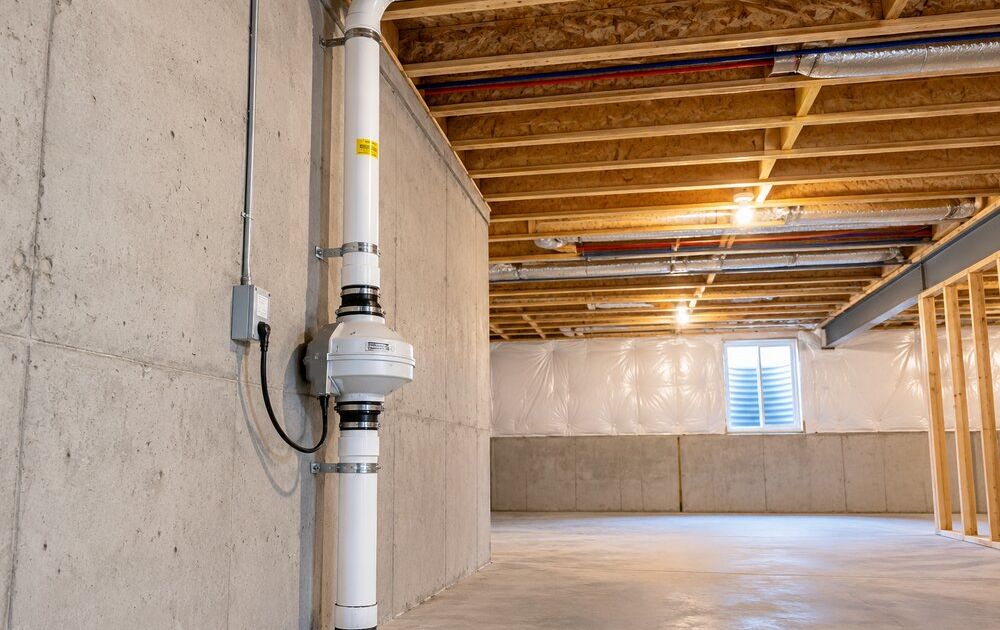
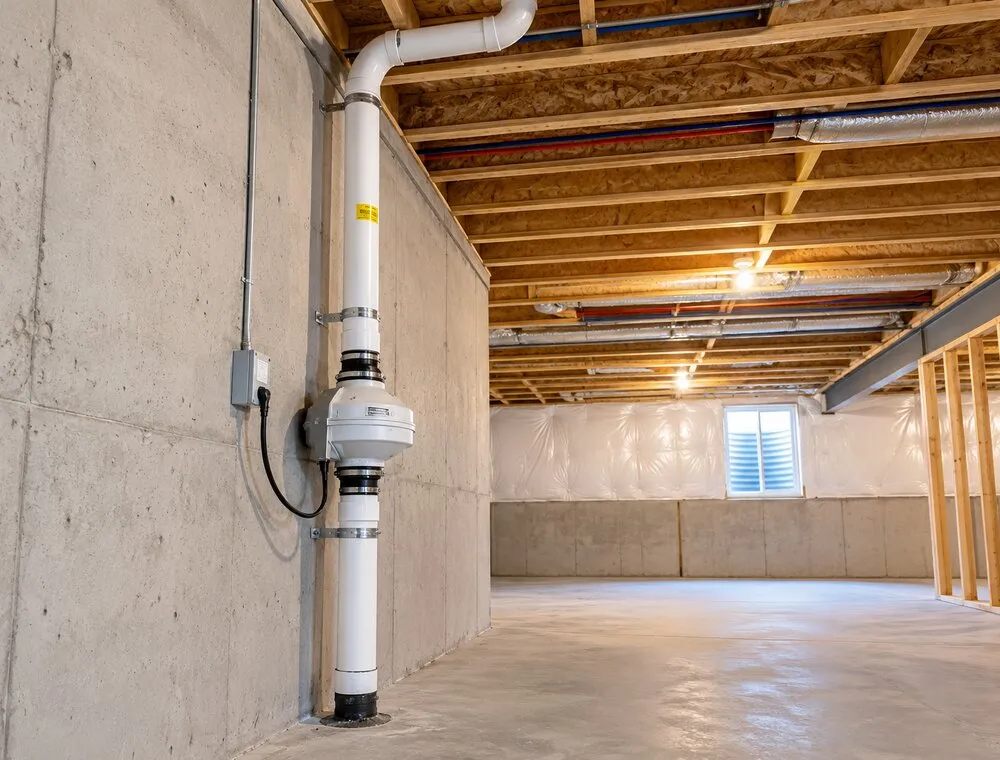
The most common mitigation method in this area is sub-slab depressurization. A certified mitigator drills a small hole in the basement floor, pulls radon-laden air from beneath the slab with a fan, and vents it outside above the roofline. This creates a negative pressure zone under the house that stops radon from entering. In homes with a crawl space instead of a full basement, a similar approach works by sealing the crawl space with a heavy-duty vapor barrier and then venting the air under that barrier. Sealants are also used to close obvious cracks and gaps, but sealing alone is rarely enough. You need active ventilation to make a real difference.
New Construction and Radon-Resistant Construction
If you are building a new home in York County, you have a great opportunity to prevent radon from ever becoming a problem. Radon-resistant construction techniques have been standard in many areas since the mid-1990s, but not all builders follow them by default. A proper system includes a layer of gravel under the slab, a vapor barrier, a sealed sump or pipe stub, and a vent pipe that runs up through the roof. Even if you do not install the fan right away, having the pipe in place makes future mitigation simple and cheap. I have seen too many new homes built without these features because the buyer did not know to ask. It is worth the small upfront cost.
Real Estate Disclosure and Your Rights
When you buy or sell a home in Pennsylvania, the law requires sellers to disclose any known radon test results. But the law does not require a seller to test if they have not already done so. That means a buyer might move into a house with no radon history at all. As a buyer, you have the right to include a radon test in your home inspection contingency. Most real estate agents in York County are familiar with this, and a good home inspector can either perform the test themselves or recommend a certified tester. If the test comes back high, you can negotiate for a mitigation system or a credit to cover the cost. I always advise buyers to make testing part of the deal, even if the seller says there is no known problem.
The National Radon Action Plan and Local Resources
The EPA and several federal agencies have laid out a national radon action plan with the goal of reducing radon-related lung cancer through testing and mitigation. Pennsylvania has its own program through the state health department, and York County has local resources that can help. You can find a list of certified mitigators and testers through the Pennsylvania Department of Environmental Protection. These professionals are trained to follow the latest standards, and they can help you decide on the best approach for your specific home. Do not trust someone who claims they can fix radon without testing first or without using a continuous monitor to verify the fix worked.
Final Thoughts on Testing
Living in York County means dealing with old houses, new houses, and everything in between. Radon does not care about the age of your home or how clean you keep it. The only way to protect your family is to test and, if needed, mitigate. Testing is cheap, easy, and can be done in a weekend. The peace of mind is worth far more than the cost of a test kit. I have tested my own home twice in the past five years, and I will do it again next year. It is just part of responsible homeownership in this region.
If you have not yet done so, make a plan to test for radon in York this season. You can pick up a radon test kit at a local hardware store or order one online. Follow the instructions carefully, keep the test away from drafts and direct sunlight, and send it to the lab when the time is up. In a few weeks, you will have your answer. And if the answer is high, you will know exactly what to do next.